Separation of Powers
The constitutional division of government authority among distinct legislative, executive, and judicial branches to prevent any single entity from accumulating excessive power. Debate concerns its effectiveness, adaptability, and limitations.
Arguments for and against
Prevention of tyranny
Distributing authority across independent branches creates structural barriers to the concentration of power that history shows leads to abuse. Checks and balances have repeatedly slowed or prevented executive overreach, even in polarized political climates.
Determined majorities can capture all branches simultaneously, rendering separation of powers hollow. When courts are packed, legislatures controlled, and executives unchecked by political opposition, the formal structure provides little practical protection.
Governmental efficiency
The friction created by requiring inter-branch cooperation is a feature rather than a bug: it forces compromise, broader consensus, and more careful deliberation before major policy changes are enacted, reducing the risk of hasty errors.
Legislative gridlock, executive-judicial conflicts, and prolonged inter-branch disputes leave urgent crises — public health emergencies, economic shocks, security threats — unaddressed while institutional actors defend their prerogatives.
Judicial independence
An independent judiciary insulated from electoral pressure provides a counter-majoritarian check that protects minority rights and constitutional principles against popular but legally dubious measures.
Unelected judges with life tenure can impose policy preferences without democratic accountability. Judicial independence, unchecked by meaningful review, can become judicial supremacy — a different form of concentrated power.
Adaptability to modern governance
The core principle of separated powers can be adapted to parliamentary systems, federal structures, and independent agencies, demonstrating flexibility across diverse constitutional orders beyond the classic U.S. model.
Administrative states have evolved complex regulatory agencies that blend legislative, executive, and judicial functions in ways that the original separation-of-powers framework was not designed to accommodate, creating legitimacy gaps.
What influencers say
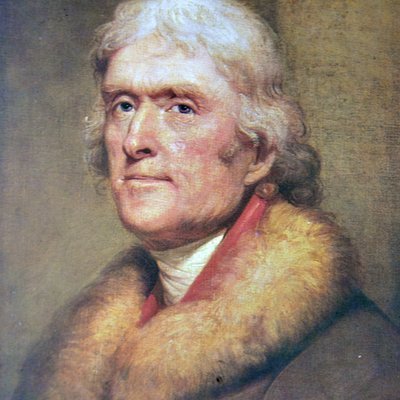
"The executive in our governments is not the sole, it is scarcely the principal object of my jealousy. The tyranny of the legislatures is the most formidable dread at present, and will be for long years. That of the executive will come in it's turn, but it will be at a remote period."