Entrepreneurship
Entrepreneurship is the process of identifying opportunities, assembling resources, and bearing risk to create new businesses or bring new products and services to market. It is celebrated as a driver of innovation and growth but involves high rates of failure and significant social consequences.
Arguments for and against
Its role in economic innovation and growth
Entrepreneurial ventures are a primary mechanism through which new technologies and business models reach the market; competitive entry by new firms disciplines incumbent players and drives productivity-enhancing innovation across the economy.
Much venture-funded entrepreneurship produces incremental improvements in consumer apps rather than the deep technological or social innovation needed to address major challenges; resources follow investor preference rather than social value.
The personal costs and psychological risks
Entrepreneurs voluntarily assume personal and financial risk in pursuit of goals they find meaningful; the autonomy, purpose, and potential reward of building something genuinely valuable makes entrepreneurship a fulfilling career path for those suited to it.
The romanticization of entrepreneurship obscures high failure rates, mental health crises among founders, and the financial precarity that affects not only the entrepreneur but their employees and families when ventures collapse.
Its accessibility across socioeconomic backgrounds
Digital platforms, open-source tools, and expanding access to small business credit have meaningfully lowered the barriers to entry for entrepreneurship, enabling people without elite networks or inherited capital to start ventures.
Access to venture capital and high-growth entrepreneurship remains highly skewed by race, gender, and geography; the version of entrepreneurship that generates transformative economic returns is largely inaccessible to those without privileged starting positions.
Its relationship to employment and labor standards
Successful entrepreneurial ventures create jobs, often in industries and regions underserved by incumbent employers; the employment and wage effects of new firm creation are among the most significant contributions of entrepreneurial activity.
Entrepreneurial firms — particularly in the platform economy — frequently compete on labor costs through misclassification of workers, avoidance of employment law, and suppression of worker organizing, eroding standards across the broader labor market.
What influencers say

"Economic power is exercised by means of a positive, by offering men a reward, an incentive, a payment, a value; political power is exercised by means of a negative, by the threat of punishment, injury, imprisonment, destruction. The businessman's tool is values; the bureaucrat's tool is fear."
"Even if smog were a risk to human life, we must remember that life in nature, without technology, is wholesale death."
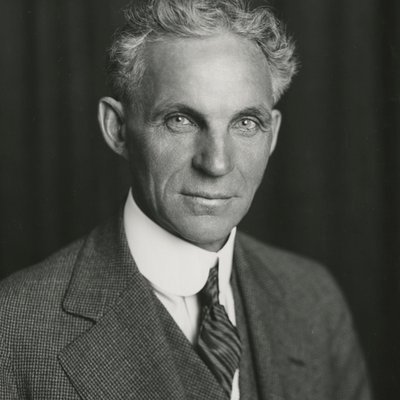
"The average successful banker is by no means so intelligent and resourceful a man as is the average successful business man. Yet the banker through his control of credit practically controls the average business man."
"Business will control money instead of money controlling business. The ruinous interest system will be greatly modified. Banking will not be a risk, but a service. Banks will begin to do much more for the people than they do now, and instead of being the most expensive businesses in the world to manage, and the most highly profitable in the matter of dividends, they will become less costly, and the profits of their operation will go to the community which they serve."

"I’m convinced that about half of what separates the successful entrepreneurs from the non-successful ones is pure perseverance."
"Sometimes when you innovate, you make mistakes. It is best to admit them quickly, and get on with improving your other innovations."
"The desktop computer industry is dead. Innovation has virtually ceased. Microsoft dominates with very little innovation. That's over. Apple lost. The desktop market has entered the dark ages, and it's going to be in the dark ages for the next 10 years, or certainly for the rest of this decade."