Automation
Automation refers to the use of technology — machines, software, and artificial intelligence — to perform tasks previously carried out by human labor. It drives productivity gains but raises pressing questions about employment, distribution, and the nature of work.
Arguments for and against
Its net effect on employment
Historical technological transitions have consistently created more jobs than they destroyed by generating entirely new industries and lowering costs in ways that expand overall economic activity and consumer demand.
The pace and breadth of current automation — spanning cognitive as well as physical tasks — may outstrip the economy's capacity to generate substitute employment, particularly for workers without advanced technical skills.
Its impact on productivity and economic growth
Automation dramatically increases output per worker, reduces the cost of goods and services, and frees human attention for higher-value activities — generating the economic surplus that funds social investment.
Productivity gains from automation have been disproportionately captured by capital owners; without redistributive mechanisms, automation deepens inequality even as it expands aggregate wealth.
Its effects on workplace safety and conditions
Automating dangerous, repetitive, or physically demanding tasks reduces workplace injuries, removes humans from hazardous environments, and improves overall working conditions for those who remain employed.
Automation can also intensify monitoring and performance pressure on remaining workers, as algorithmic management systems track every action and enforce productivity standards that leave little room for human judgment or dignity.
The question of who controls and benefits from it
Democratic societies can shape how automation is deployed through labor law, taxation, and investment in education and retraining — ensuring that its benefits are broadly shared rather than captured by a narrow elite.
The decisions about what to automate and how to distribute gains are currently made almost entirely by private firms driven by profit rather than social welfare, making equitable outcomes dependent on political will that has historically been weak.
What influencers say

"The first rule of any technology used in a business is that automation applied to an efficient operation will magnify the efficiency. The second is that automation applied to an inefficient operation will magnify the inefficiency."
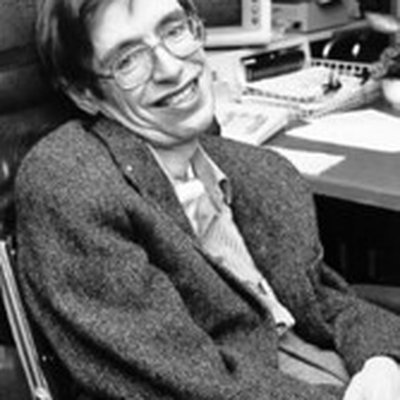
"The development of full artificial intelligence could spell the end of the human race. We cannot quite know what will happen if a machine exceeds our own intelligence, so we can't know if we'll be infinitely helped by it, or ignored by it and sidelined, or conceivably destroyed by it."
"If machines produce everything we need, the outcome will depend on how things are distributed. Everyone can enjoy a life of luxurious leisure if the machine-produced wealth is shared, or most people can end up miserably poor if the machine-owners successfully lobby against wealth redistribution . So far, the trend seems to be toward the second option, with technology driving ever-increasing inequality ."